
Ida Rolf: The Visionary Behind Structural Integration
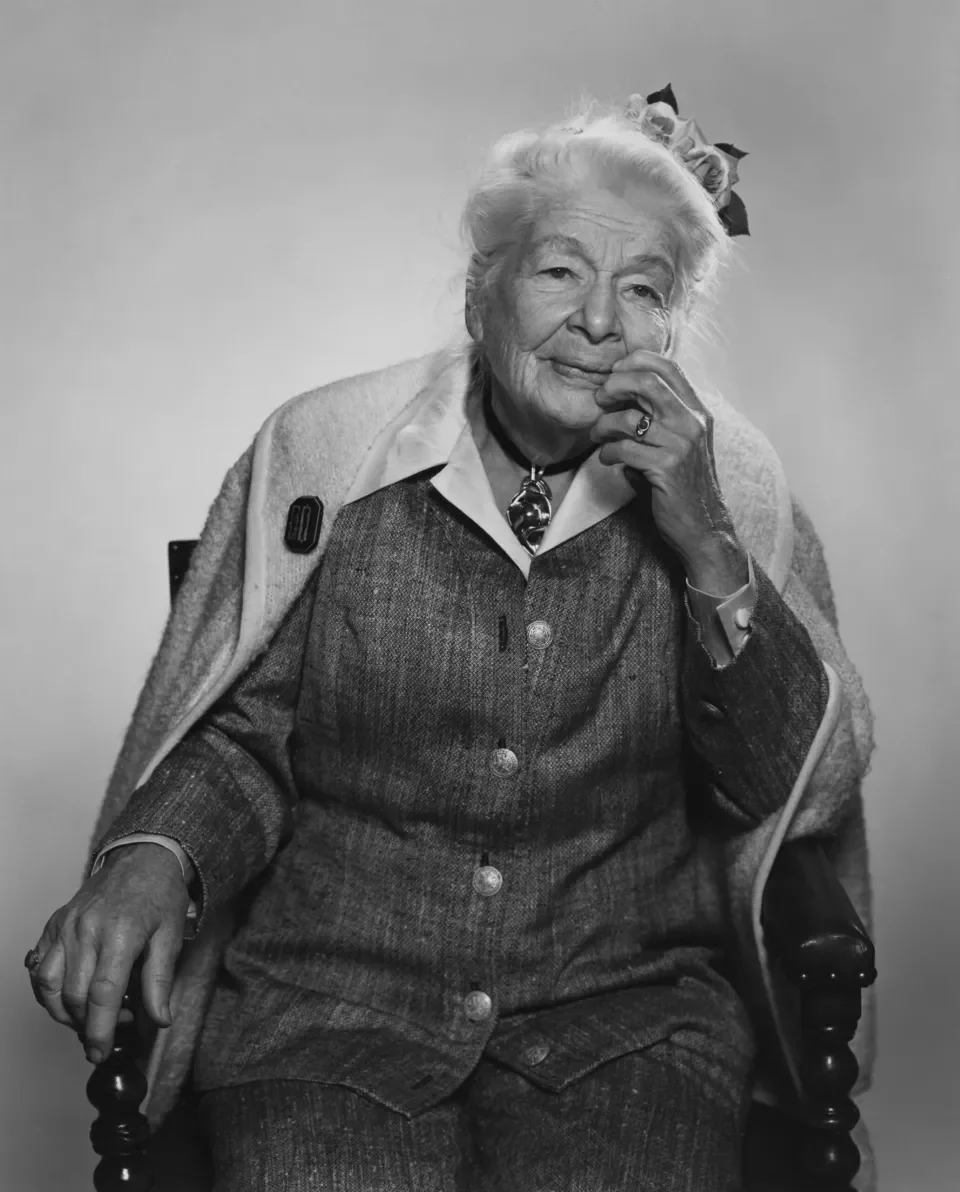
Ida Rolf
When people talk about transformational bodywork—work that doesn’t just ease tension but reorganizes a person’s entire sense of alignment—they eventually arrive at the name Ida Pauline Rolf. Revered as a pioneer in holistic health, Rolf developed what is now known as Structural Integration, or more commonly, Rolfing®. Her life’s work bridged science, intuition, and deep curiosity about the human body’s potential for change.
Early Life and Academic Foundations
Ida Rolf was born on May 19, 1896, in New York City. From the beginning, she showed a keen interest in science—a rarity for women at the time. She graduated from Barnard College in 1916 and later earned her PhD in biochemistry from Columbia University.
In the 1920s, Rolf joined the Rockefeller Institute for Medical Research. There, she conducted groundbreaking work in organic chemistry and studied the intricate relationships between structure and function in biological systems. Although her early research focused on the molecular sciences, it planted the seeds for her future: she became fascinated by how structure influences health on every level.
A Search for Healing Beyond Conventional Medicine
Rolf was a courageous explorer of ideas. As she witnessed friends and acquaintances struggle with chronic pain and physical limitations that conventional medicine couldn’t solve, she began seeking alternative perspectives.
Her exploration took her through yoga, osteopathy, homeopathy, chiropractic techniques, and various forms of bodywork and movement education. From each discipline she gathered insights, weaving them into a new understanding of how the body organizes itself in relation to gravity.
This quest led her to a profound realization:
When the body’s connective tissues (fascia) become tight, shortened, or imbalanced, the whole structure is pulled out of alignment—affecting movement, mood, and overall vitality.
The Birth of Structural Integration
By the 1940s and 1950s, Ida Rolf’s ideas solidified into a systematic approach: a multi-session process of hands-on bodywork combined with movement education aimed at restoring the body’s natural, efficient alignment.
She called this method Structural Integration.
Rolf understood fascia as a responsive, adaptable network shaping the entire body. Her work focused on:
Lengthening and reorganizing fascial layers
Improving structural balance in gravity
Enhancing ease, mobility, and integration
Helping people move with more freedom and efficiency
What set her work apart was its relationship-centered understanding of the body: not focusing on single muscles but on global patterns and relationships across the entire structure.
Collaboration with the Esalen Institute
In the 1960s, Rolf was invited to teach at the Esalen Institute in Big Sur, California—a hub for human potential research, somatic psychology, and cutting-edge approaches to wellness. It was here that her work found a vibrant audience and began to flourish.
Her students reported transformative changes: chronic pain easing, posture shifting, emotional release, and a newfound sense of integration. Word spread quickly. Structural Integration was no longer an obscure, experimental method—it had become a movement.
In 1971, she founded the Rolf Institute of Structural Integration (now the Dr. Ida Rolf Institute®) in Boulder, Colorado, formalizing training standards for practitioners.
A Legacy Rooted in Transformation
Ida Rolf continued teaching and refining her approach until her passing in 1979. Her legacy endures not only in the thousands of certified Structural Integration practitioners worldwide but in the broader somatic field that she helped shape.
Her contributions paved the way for deeper understandings of:
Fascia as a dynamic organ system
The body’s adaptability and capacity for change
The role of gravity in movement and well-being
The interconnectedness of physical, emotional, and psychological patterns
Today, Structural Integration is recognized globally as a powerful method for improving posture, enhancing performance, supporting rehabilitation, and fostering holistic well-being.
Why Ida Rolf Matters Today
Modern fascia research continues to validate much of what Rolf intuited decades before scientific tools could confirm it. Her core belief—that when the body is aligned, it functions better—still resonates with people seeking more than temporary relief.
Ida Rolf didn’t just develop a technique. She offered a paradigm shift, inviting us to see the body as a resilient, ever-changing system capable of transformation.
Her work lives on every time someone stands a little taller, moves with a little more ease, or discovers a new relationship with their own body.
Joshua Lyons developed his Lyons Structural Therapy approach as a result of his certification as a teacher of the Alexander Technique, which is the foundation of his work. He received his training at the Alexander Alliance in Philadelphia and at the Toronto School of The Alexander Technique. Joshua is also a certified practitioner of Ida Rolf's method of Structural Integration, a powerful massage approach to create improved balance and organization in the body. He received his training at the Rolf Institute and the Guild for Structural Integration.
Learn more about his approach to treating scoliosis here and his massage therapy approach here.
Ready to book a treatment appointment? Click on the button below.